
Ancaman Berbasis AI: Apa yang Berubah dan Apa yang Tetap Relevan bagi SOC?
Bagaimana ancaman berbasis AI mengubah operasional SOC? Simak perkembangan terbaru dan kapabilitas deteksi, investigasi, serta respons yang...

Oleh Cisometric Marketing Team, Diterbitkan pada Januari 4, 2026
AI is rapidly moving from experimental pilots to core business infrastructure. Organisations are now using AI to score credit, triage patients, screen CVs, detect fraud, and support security operations.
At the same time, expectations from regulators, boards, and customers are changing. Secure and trustworthy AI is now seen as essential by a large majority of executives, yet only a minority of generative AI projects are properly secured and governed (IBM, 2025).
This gap between AI adoption and AI assurance is where AI audits become critical. An AI audit provides structured evidence that AI systems are not only effective, but also fair, compliant, and under control.
AI audit is a structured, evidence-based examination of how AI systems are designed, trained, and deployed across their lifecycle (IBM, 2025). 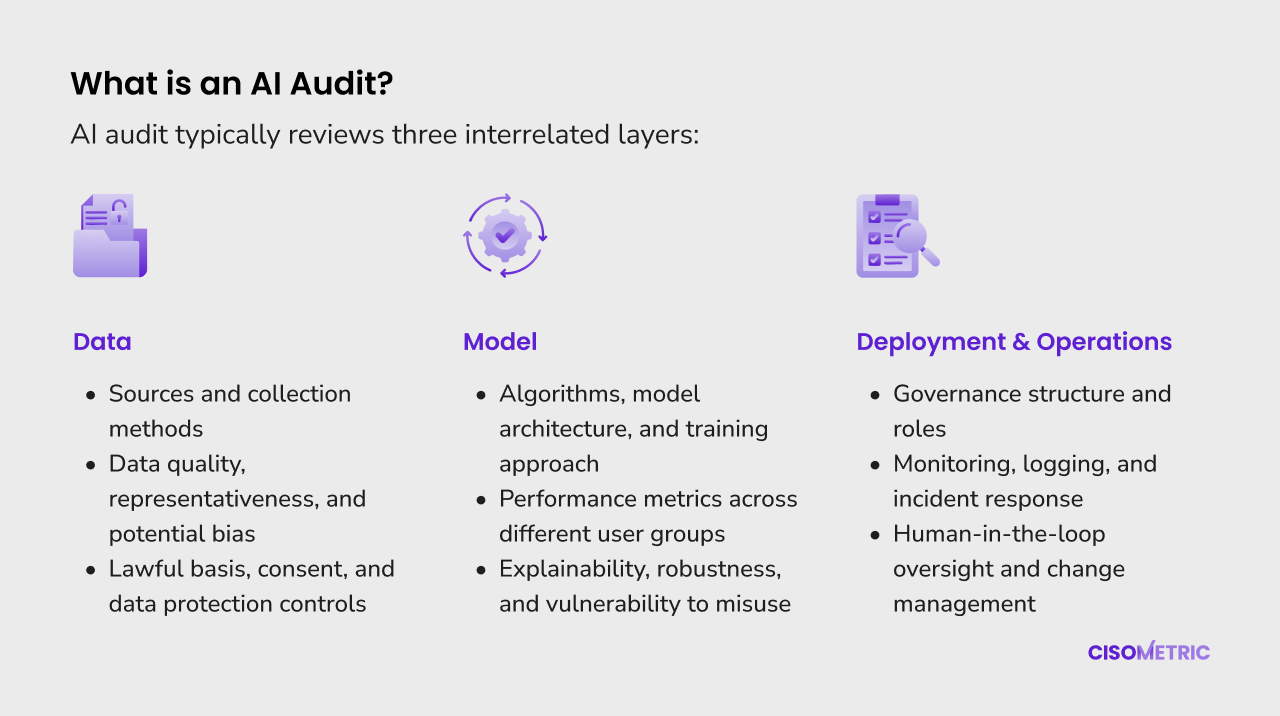
In practice, an AI audit typically reviews three interrelated layers:
1. Data
2. Model
3. Deployment & Operations
Essentially, AI audits is a “health check-up” for AI systems, emphasising fairness and impact assessments, conformity with regulations such as the EU AI Act, error-rate analysis across demographic groups, red teaming to stress-test models, and cyber safety and privacy checks (Forbes, 2024).
AI auditing is also positioned as a systematic way to align AI with accountability, compliance, and trust expectations, not just technical optimization (Darwin, 2025).
1. Managing bias and fairness risks
AI systems used for credit scoring or autonomous vehicles can introduce biased or unsafe outcomes if not properly audited, with potential impact on fundamental rights, health, and even safety of life (The Conversation, 2025).
Bias can enter through:
An AI audit makes these risks visible through fairness testing, error-rate analysis across segments, and review of data sampling and labelling practices.
2. Increasing transparency and accountability
Many AI systems still operate as “black boxes” from a business and regulatory perspective. Without documentation, logs, and explainability, it becomes difficult to:
AI audits help organisations demonstrate that personal data is handled lawfully, that algorithms do not introduce new vulnerabilities, and that metrics and access controls are in place to mitigate risks over time (IBM, 2025).
3. Aligning with emerging regulation
Regulation is moving quickly towards risk-based AI governance:
In Indonesia, The Conversation notes that AI-specific audit obligations do not yet exist, but general laws (such as UU ITE, UU Perlindungan Konsumen, and UU PDP) already provide legal hooks related to transparency, accountability, and consumer protection (The Conversation, 2025).
As regulations mature, it is highly likely that formal AI audits (internal or third-party) will become a standard mechanism to demonstrate compliance.
4. Protecting reputation and strategic value
Forbes emphasises that enterprises increasingly seek AI audits not only to meet legal requirements but also to reduce reputational risk and signal ethical leadership (Forbes, 2024).
A single AI failure (such as discriminatory hiring outcomes or unfair credit decisions) can quickly turn into:
By contrast, transparent AI auditing can become part of a broader trust strategy, similar to SOC 2 reports or sustainability disclosures.
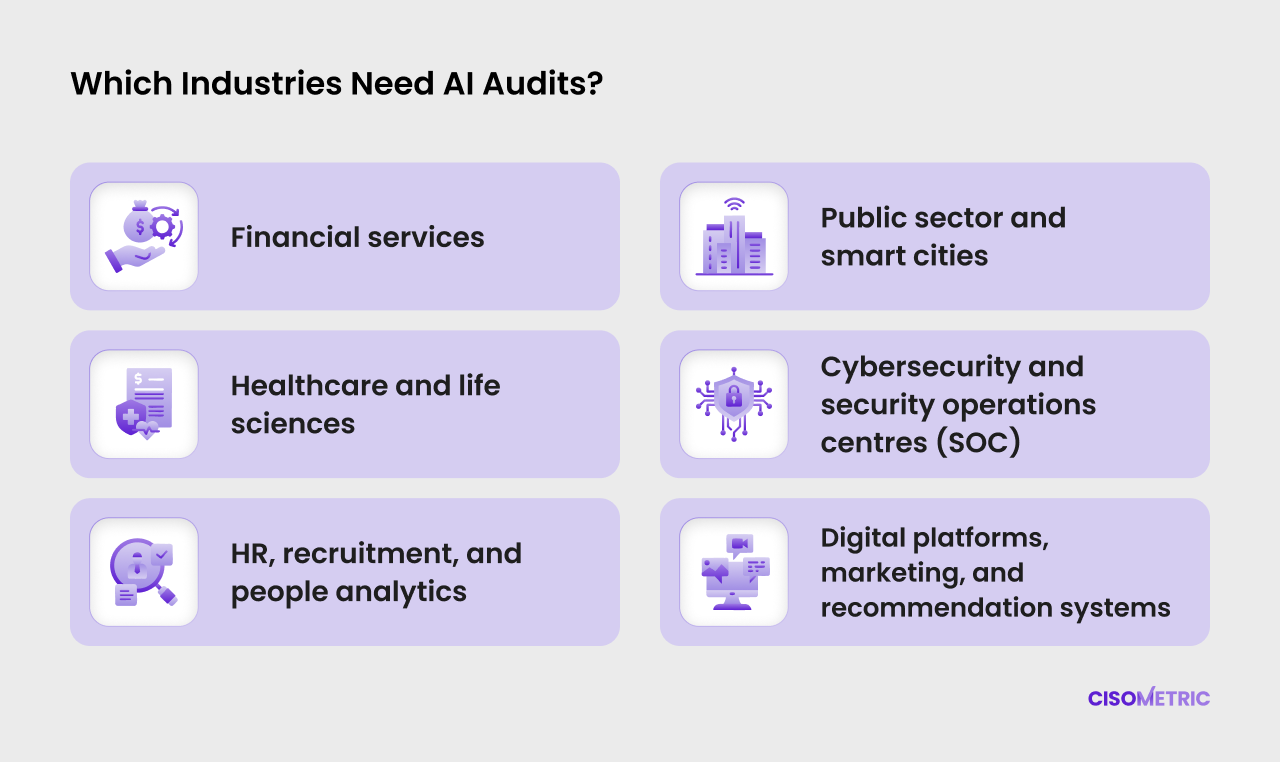
Which Industries Need AI Audits?
Any sector that uses AI for decisions affecting people, money, or safety is a strong candidate for AI audits. Common examples include:
For many organisations, the highest risk is not only in obvious AI products, but also in embedded AI components inside existing platforms and tools.
AI audits can be grouped into several types (IBM, 2025; Forbes, 2024):
1. Data and Bias Audits
Focus:
Objective: Ensure that training and inference data are legal, secure, and as fair as reasonably possible.
2. Technical and Robustness Audits
Focus:
Objective: Confirm that the model is reliable, resilient, and monitored under realistic conditions.
3. Ethical and Impact Audits
Focus:
Objective: Assess whether the system is aligned with organisational values and societal expectations, not only legal minimums.
4. Legal, Compliance, and Governance Audits
Focus:
Objective: Demonstrate that AI systems are governed, auditable, and defensible to regulators, auditors, and business partners.
In mature organisations, these dimensions are assessed together rather than as isolated activities.
Global Regulatory Developments on AI Auditing
Several key developments are shaping how organisations should think about AI audits:
The common direction is clear: risk-based, documented, and evidence-backed oversight. AI audits are becoming one of the primary tools to meet these expectations.
AI adoption is rising, but trust, safety, and compliance cannot be assumed. Organisations are increasingly expected to demonstrate that their AI systems are:
AI audits provide the structure to make this possible, not only reducing risks, but strengthening organisational integrity and customer confidence.
As Indonesia and the region move toward more formal AI governance, now is the time for businesses to adopt responsible, well-documented AI practices.
If your organisation is exploring AI adoption or already using AI in critical processes, Cisometric can support you through structured AI governance, risk assessment, and AI assurance frameworks designed for modern enterprises.
Schedule a free consultation with our experts today, click here.
For more updates on digital scams, cybersecurity insights, and expert tips, follow our social media:
LinkedIn: Cisometric
Instagram: @cisometric
Youtube: @Cisometric
Reference:
What is AI Auditing? A 2025 Guide to Risks, Compliance, and Trust
What An AI Audit Is And Why You Need One
Audit terhadap AI: Perlu dilakukan agar adil buat semua pihak
Bagaimana ancaman berbasis AI mengubah operasional SOC? Simak perkembangan terbaru dan kapabilitas deteksi, investigasi, serta respons yang...

Panduan teknis CTI: 3 tingkatan CTI, klasifikasi stealer logs vs combolists, Scattered Spider help desk bypass, IMDS cloud, dan kepatuhan UU...

Panduan teknis membedah batas ukur MTTD dan MTTR, blindspot validasi triage analis, risiko under-classification SLA, dan kapasitas respons a...
Cari Artikel Berdasarkan Kategori
Kami menggunakan cookie untuk meningkatkan pengalaman menjelajah, menganalisis lalu lintas situs, dan menyajikan konten yang relevan. Pilih cookie mana yang Anda izinkan. Kebijakan Privasi