Pernah menerima SMS dari nomor resmi bank Anda, tapi ternyata bukan dari bank tersebut?
Ini adalah contoh dari penipuan Fake BTS scam, di mana pelaku kejahatan siber membajak sinyal yang digunakan oleh ponsel kita untuk berkomunikasi. Ini bukan sekadar metode phishing biasa. Modus ini lebih canggih, lebih meyakinkan, dan tentu saja, lebih berbahaya.
Apa Itu Fake BTS Scam?
BTS (Base Transceiver Station) adalah istilah teknis untuk menara pemancar sinyal, yang biasa kita kenal sebagai menara seluler.
Perangkat ini menjadi penghubung antara ponsel Anda dan jaringan operator, mengirim dan menerima sinyal suara, SMS, serta data. Setiap kali Anda melakukan panggilan, mengirim pesan, atau sekadar membuka media sosial, ponsel Anda akan terhubung ke BTS terdekat.
Biasanya, BTS dioperasikan oleh perusahaan telekomunikasi resmi seperti Telkomsel, Indosat, atau XL. Tapi dengan alat yang tepat (meskipun ilegal), pelaku kejahatan bisa membuat BTS palsu yang meniru perangkat asli dan mengelabui ponsel Anda untuk terhubung ke sinyal mereka. Setelah itu, mereka bisa mengirim SMS yang seolah-olah dikirim oleh pihak terpercaya atau resmi.
Modus ini mulai sering digunakan di Indonesia.
Korban menerima SMS yang terlihat sangat meyakinkan, berisi informasi soal poin bank yang akan kadaluarsa, peringatan keamanan akun, atau tawaran menarik. Ketika mereka klik tautan di dalamnya dan mengisi data pribadi, tanpa sadar mereka sedang memberikan akses ke informasi yang sangat sensitif pada para penipu.
Artikel ini akan membahas bagaimana modus ini bekerja, cara pelaku mengeksploitasi sistem, dan bagaimana Anda bisa mengenali tanda-tandanya sebelum terlambat.
Bagaimana Fake BTS Bekerja?
Seperti disebutkan sebelumnya, Fake BTS adalah perangkat palsu yang meniru fungsi menara jaringan seluler. Berbeda dari menara resmi milik operator, BTS palsu ini bekerja di luar sistem jaringan yang sah. Ia meniru sinyal operator, membuat ponsel korban terkoneksi secara otomatis, dan memungkinkan pelaku menyebarkan pesan tanpa terdeteksi oleh operator.
Biasanya, perangkat ini bersifat mobile, dioperasikan dari dalam mobil atau van, dengan satu tujuan utama, yaitu mengirim SMS berisi tautan phishing langsung ke korban, dengan menyamar sebagai pihak resmi seperti bank.
Pelaku seringkali menggunakan teknik spoofing, yaitu menyamarkan nomor pengirim agar terlihat seperti bank seperti BCA atau lembaga lainnya. Menurut laporan dari BCA (2025), pesan ini bisa menembus filter operator karena dikirim langsung melalui BTS palsu.
Baca juga: Beware of Tax Scams: Recognize and Avoid New DJP Spoofing Schemes
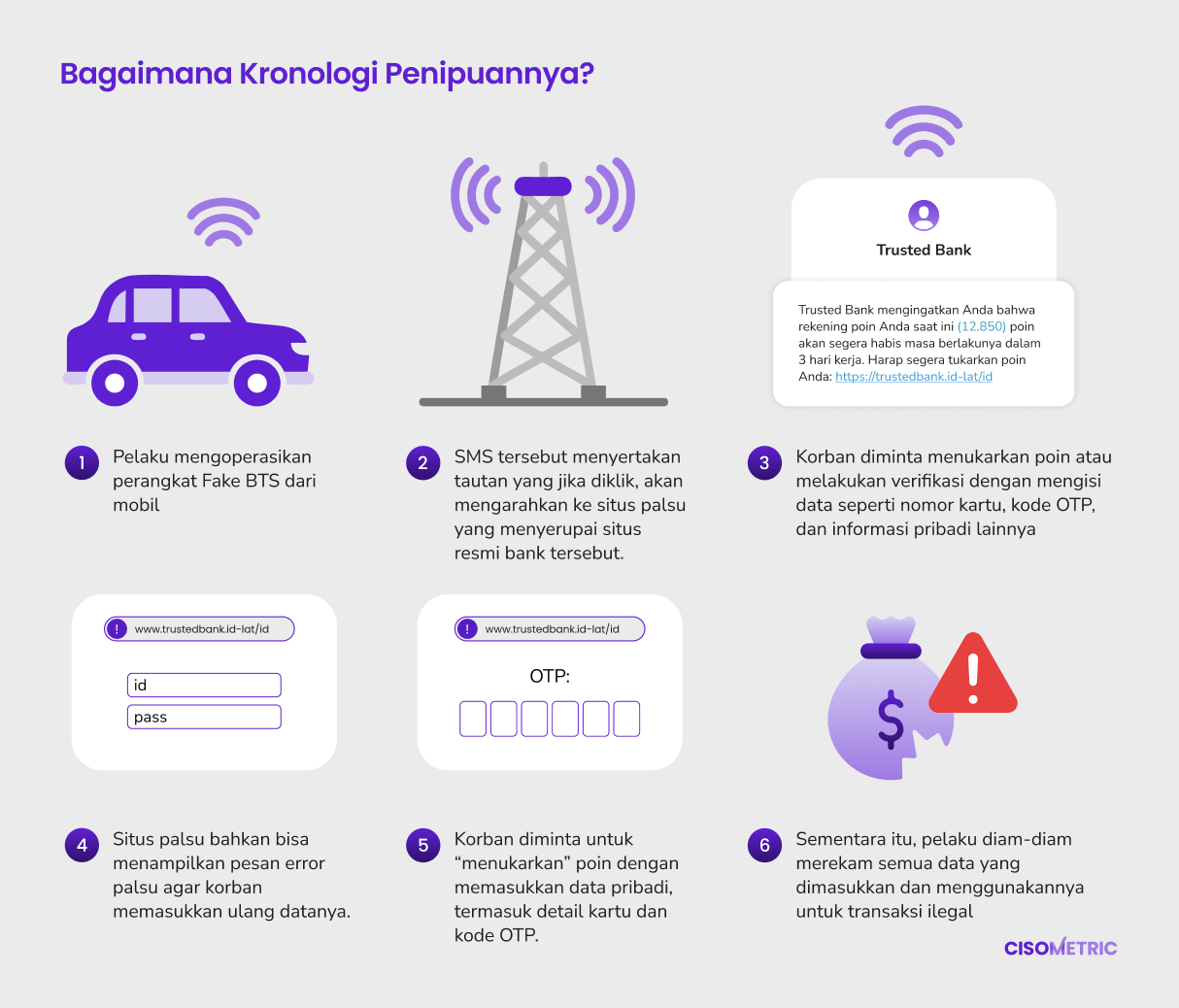
Bagaimana Kronologi Penipuannya?
Berikut alur umum dari penipuan Fake BTS:
1. Persiapan
Pelaku mengoperasikan perangkat Fake BTS dari mobil, dan ponsel korban secara otomatis terkoneksi ke sinyal tersebut.
Korban menerima SMS dari nomor yang terlihat resmi (misalnya bank), berisi peringatan seperti “Poin Anda akan hangus hari ini.”
2. Umpan diberikan
SMS tersebut menyertakan tautan yang jika diklik, akan mengarahkan ke situs palsu yang menyerupai situs resmi bank tersebut.
3. Korban dijebak
Korban diminta menukarkan poin atau melakukan verifikasi dengan mengisi data seperti nomor kartu, kode OTP, dan informasi pribadi lainnya. Situs palsu bahkan bisa menampilkan pesan error palsu agar korban memasukkan ulang datanya.
4. Data dicuri
Sementara itu, pelaku diam-diam merekam semua data yang dimasukkan dan menggunakannya untuk transaksi ilegal, biasanya di platform e-commerce internasional.
Kasus seperti ini sudah terjadi di Indonesia. Bareskrim Polri berhasil menangkap dua warga negara asing yang diduga menjalankan modus ini dari dalam kendaraan. Namun investigasi terhadap jaringan yang lebih besar masih berlangsung (Intimedia, 2024).
Tanda-Tanda Anda Mungkin Sedang Jadi Target Fake BTS Scam
Yang membuat modus ini berbahaya adalah betapa meyakinkan pesan yang scammer kirimkan.
SMS muncul dengan nama pengirim yang resmi, bahasanya terlihat profesional, dan tautannya pun tampak rapi. Semua dirancang agar Anda langsung bereaksi, sebelum sempat berpikir panjang.
Berikut beberapa tanda peringatan yang perlu diwaspadai:
Kalimat seperti “Segera tukarkan hari ini!” atau “Akun Anda akan dibekukan!” adalah taktik umum untuk membuat Anda panik.
Jangan tertipu hanya karena pengirimnya bernama “BANK” atau “BCA.” Fokuslah pada isi pesan, bukan sekadar nama pengirim.
Selalu periksa URL sebelum klik link apapun. Jika ragu, lebih baik jangan klik sama sekali.
Baca juga: Tips to Avoid Scam Websites
Bank resmi tidak pernah meminta OTP, nomor kartu, atau password melalui SMS. Kalau ada permintaan seperti itu, kemungkinan besar itu penipuan.
Langkah Pencegahan yang Bisa Anda Lakukan
Jika merasa ragu, lebih baik akses langsung aplikasi resmi atau hubungi CS bank Anda.
Misalnya, hubungi BCA melalui haloBCA App atau WhatsApp resmi mereka di 0811 1500 998.
Aktifkan 2FA (two-factor authentication) di semua akun penting Anda. Solusi seperti FaceToken dan PhoneToken (VIDA, 2025) juga bisa menghilangkan kebutuhan OTP via SMS yang rentan terhadap serangan Fake BTS.
Baca juga: Protect Your Accounts with 2FA – It's Easier Than You Think!
Operator seluler dan Kementerian Komunikasi mendorong masyarakat untuk melaporkan pesan mencurigakan. Langkah kecil ini bisa mencegah korban-korban berikutnya.
Kesimpulan
Penipuan digital semakin canggih. Modus Fake BTS membuktikan bahwa bahkan sinyal ponsel bisa disalahgunakan.
Tapi, dengan tetap waspada dan tidak mudah panik terhadap SMS bernada mendesak, Anda bisa menghindari jebakan ini.
Butuh bantuan untuk melindungi tim dan organisasi Anda dari phishing dan serangan berbasis perangkat mobile lainnya?
SOC (Security Operations Center) dari Cisometric siap membantu dengan kemampuan deteksi ancaman yang canggih, respon insiden yang cepat, hingga investigasi forensik digital.
Hubungi tim kami untuk diskusi lebih lanjut, klik di sini.
Untuk tips keamanan siber lainnya, ikuti Cisometric di media sosial.
LinkedIn: Cisometric
Instagram: @cisometric
YouTube: Cisometric