Ancaman Berbasis AI: Apa yang Berubah dan Apa yang Tetap Relevan bagi SOC?
Bagaimana ancaman berbasis AI mengubah operasional SOC? Simak perkembangan terbaru dan kapabilitas deteksi, investigasi, serta respons yang...
Oleh Cisometric Marketing Team, Diterbitkan pada Oktober 22, 2025
On 13–14 October 2025, Cisometric joined Indonesia’s flagship cybersecurity event, IndoSec 2025, a two-day summit filled with critical discussions, case studies, and future-facing innovations in the field of cybersecurity.
We had the opportunity to meet and connect with industry leaders, government stakeholders, and cybersecurity practitioners across sectors. As one of the exhibitors at the expo, our team was stationed at Booth E10, where we showcased our solutions and held meaningful conversations about the future of digital security in Indonesia.
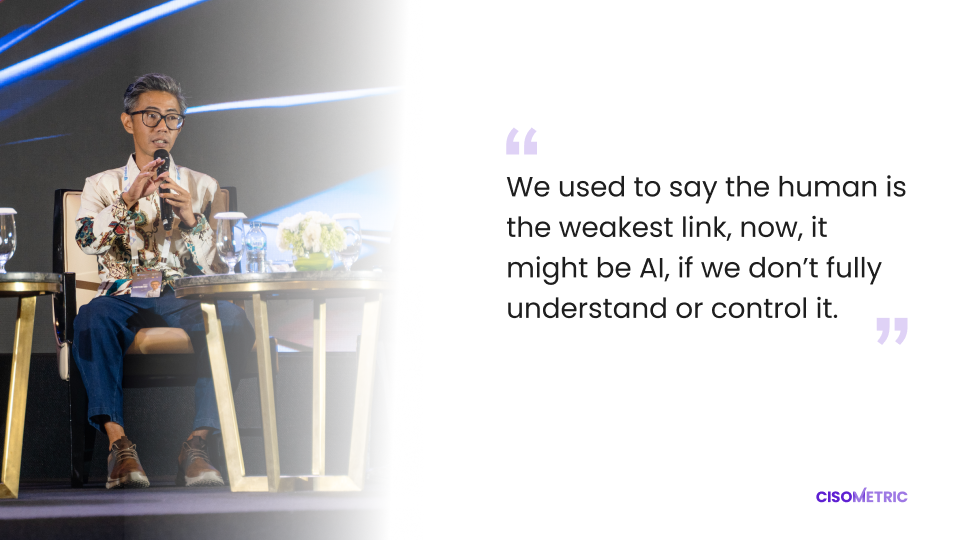
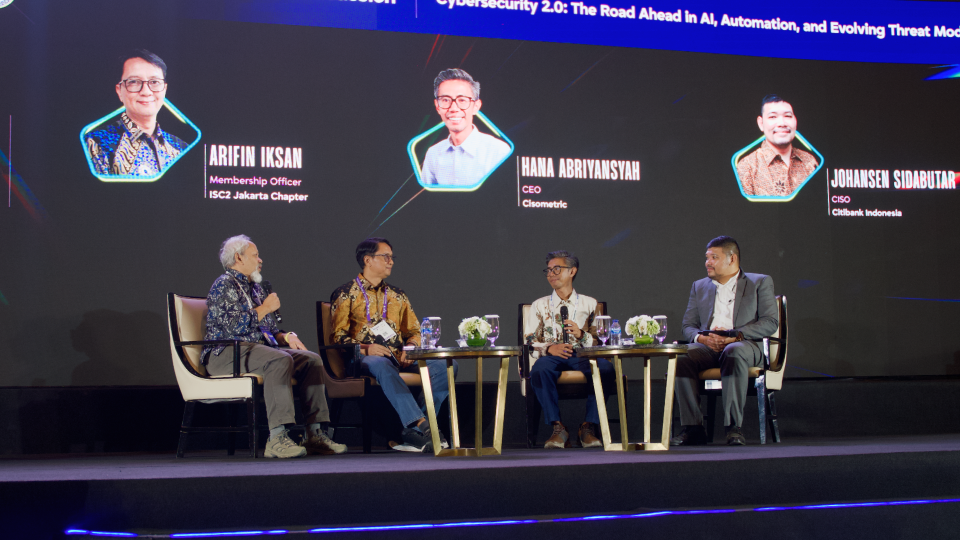
During the event, our CEO and Founder, Hana Abriyansyah, also spoke on the panel "Cybersecurity 2.0: The Road Ahead in AI, Automation, and Evolving Threat Models."
In this session, Hana joined fellow panelists to discuss how artificial intelligence is not only shaping the tools we use to defend digital systems, but also redefining the threats themselves.
Some key insights from the discussion:
Also read: AI and Machine Learning, the Future of Cybersecurity
Also read: Cybersecurity Weakest Link: The Human Factor
“We used to say the human is the weakest link, now, it might be AI, if we don’t fully understand or control it,” Hana shared during the discussion.
The panel closed with a shared call to action: cybersecurity leaders must move beyond just adopting AI tools. They must focus on governing them responsibly, embedding accountability, transparency, and human judgment into every layer.
While AI adoption has become essential in modern cybersecurity, adaptation, or how we govern and operationalize AI securely, is equally important.
Cisometric’s own approach to this has been reflected in our Security Operations Center (SOC), where AI-powered automation plays a growing role in incident response. For example, behavioral analysis is now a critical part of our detection pipeline, enabled by AI, but still guided and validated by human expertise.
This collaborative model is something we believe will define Cybersecurity 2.0: not a replacement of humans by machines, but a co-piloting relationship between AI and cybersecurity teams.
Also read: How Cisometric’s SOC Protected Businesses from Hundreds of Cyber Threats
As aforementioned, one of the key emphasis was placed during the discussion regarding governing the very AI we rely on. Just as AI empowers defenders, it can also be the weakest link when misused, misconfigured, or misunderstood.
Hana reminded the audience that while we used to consider "humans" the weakest link in cybersecurity, now the equation has changed. This evolving dynamic demands a new approach, one that balances AI innovation with accountability, from how models are trained, to how decisions are made, to how we detect when something goes wrong.
At Cisometric, we believe in co-piloting cybersecurity, where AI enhances human capability, but never replaces it. Our responsibility is to build systems that are not only powerful, but also transparent, tested, and aligned with human judgment at every step.
IndoSec 2025 underscored how cybersecurity is being redefined by AI and our response must be just as adaptive.
At Cisometric, we're proud to contribute to this evolving conversation. From enhancing our SOC with AI-driven workflows, to participating in critical discussions about governance and ethics, we remain committed to building a safer digital future, one that balances innovation with accountability.
Want to learn more about how Cisometric is applying AI in real-world security operations to strengthen your business’s digital defense?
Schedule a free consultation with our team today, click here.
For more updates on digital scams, cybersecurity insights, and expert tips, follow our social media:
LinkedIn: Cisometric
Instagram: @cisometric
Youtube: @Cisometric
Bagaimana ancaman berbasis AI mengubah operasional SOC? Simak perkembangan terbaru dan kapabilitas deteksi, investigasi, serta respons yang...

Panduan teknis CTI: 3 tingkatan CTI, klasifikasi stealer logs vs combolists, Scattered Spider help desk bypass, IMDS cloud, dan kepatuhan UU...

Panduan teknis membedah batas ukur MTTD dan MTTR, blindspot validasi triage analis, risiko under-classification SLA, dan kapasitas respons a...
Cari Artikel Berdasarkan Kategori
Kami menggunakan cookie untuk meningkatkan pengalaman menjelajah, menganalisis lalu lintas situs, dan menyajikan konten yang relevan. Pilih cookie mana yang Anda izinkan. Kebijakan Privasi